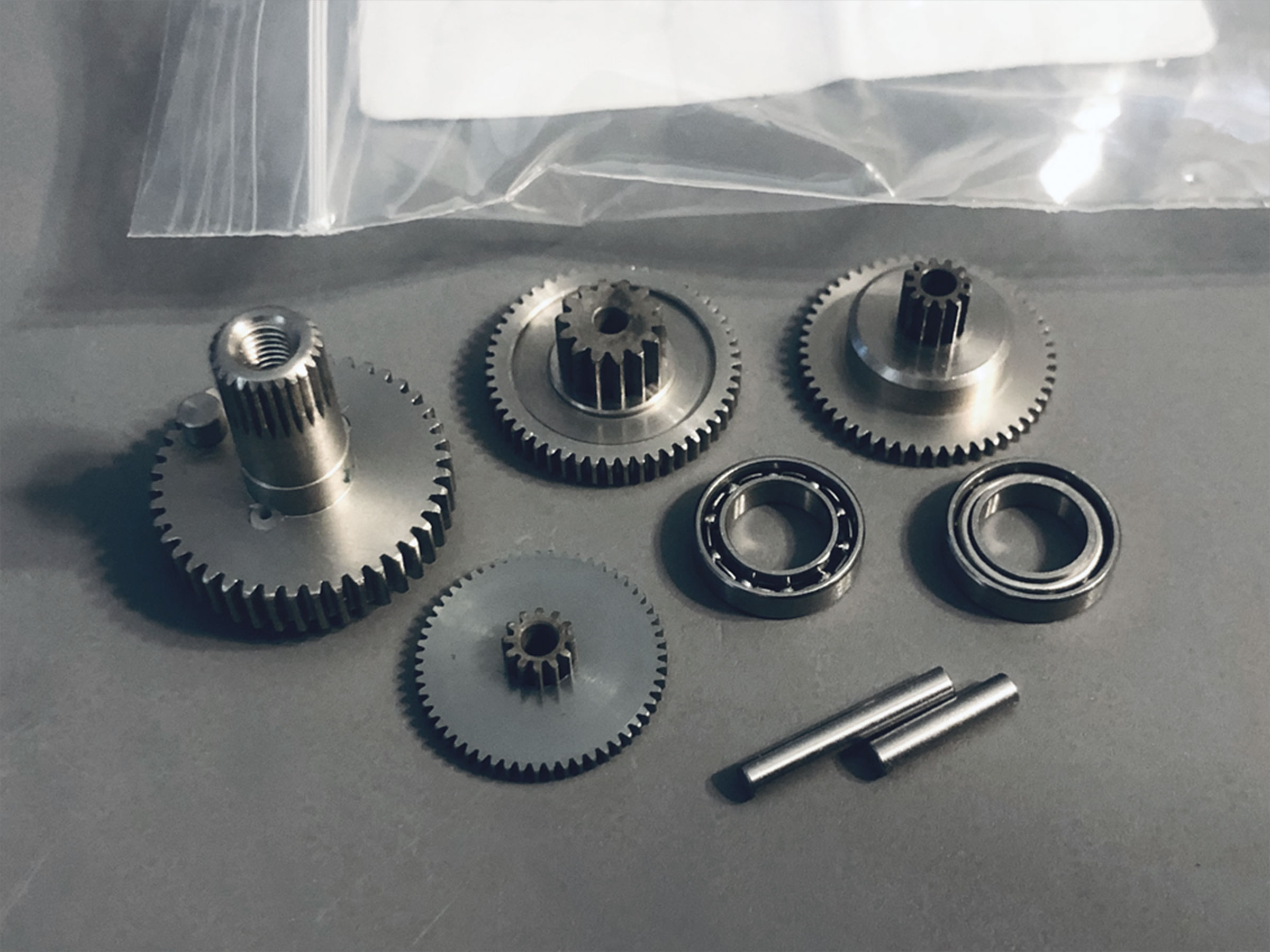
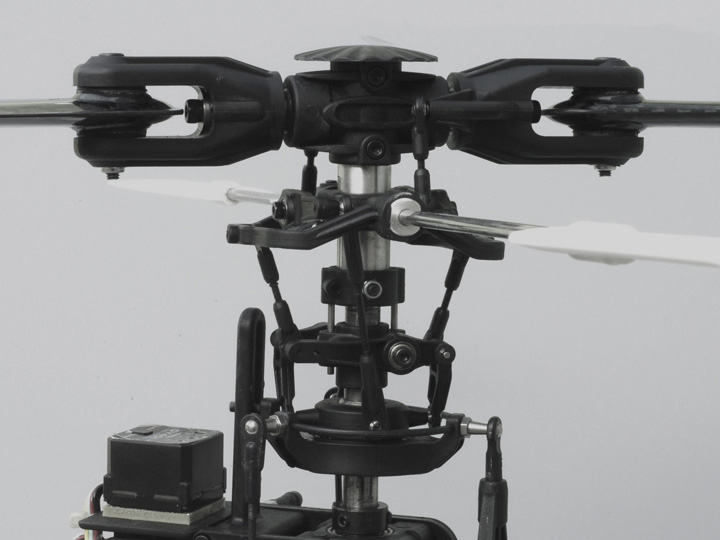
Servo motors 101
Background
Reading this white paper takes about 12-15 minutes. And as such, I’m leaving out a lot because even a 450-page textbook glosses over things since entire careers can be dedicated to just this one subject!
Oh, and as regards the hero-image above, it's a teaser because the only actual motors are the 3 behind the condenser (a widget, which shapes the spark from the coil within an automotive distributor). The mechanically 'ept' of a certain age will immediately grok what this is. As for why I'm sharing the photo? In part it's because I'm queer for old cars as well as RC models.
But principally, because a condenser is about the same size and heft as a servo motor, so I thought it would be a kick to juxtapose something from a bygone era. One, which many of you will recognize! The bright idea being to give folks a practical sense for the size of the motors used within servos.
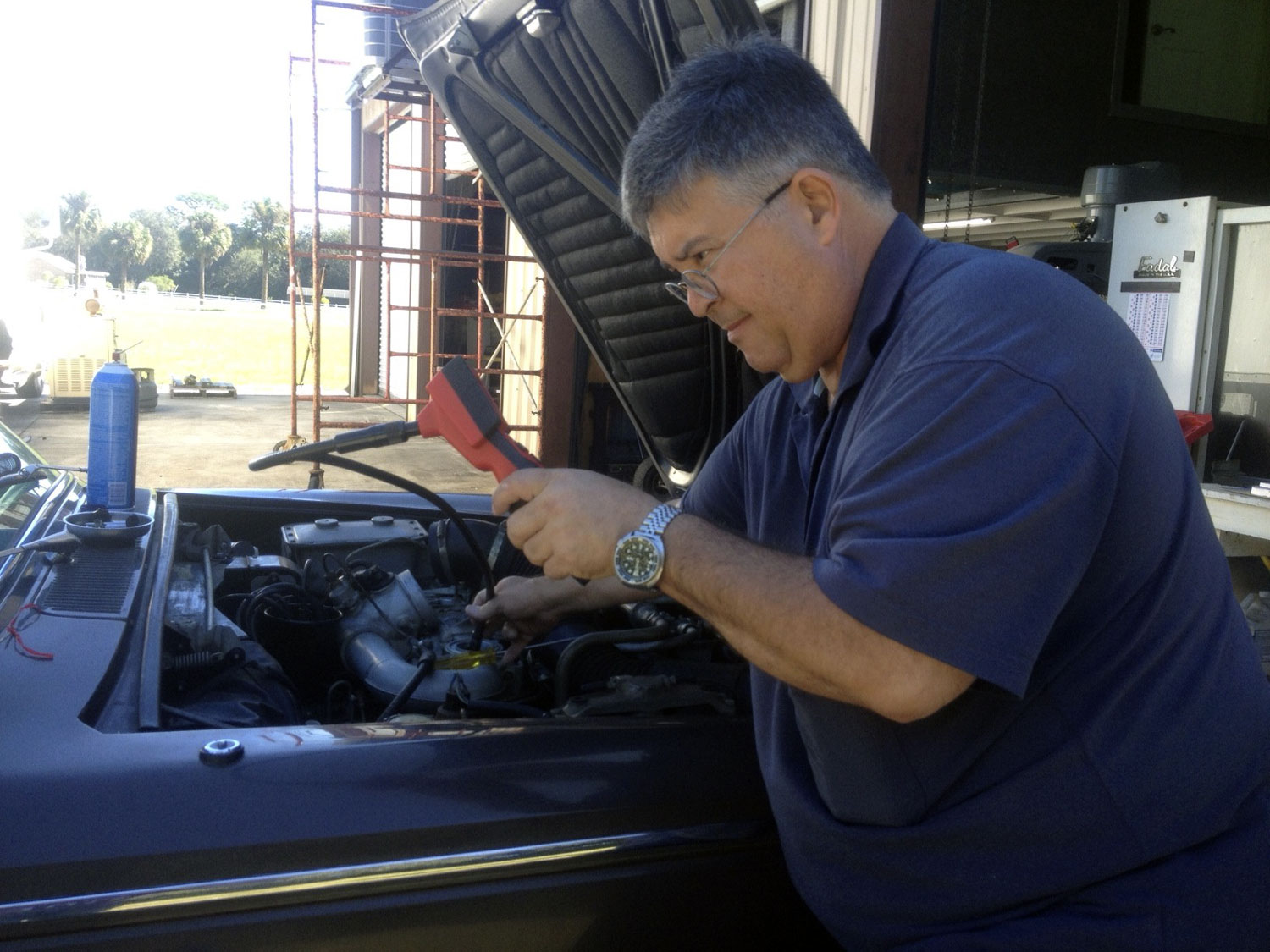
- John peering inside an antique Rolls Royce carburetor using a video scope

Speaking of servo motors, the three arrayed behind the condenser in the above photo are all 15mm in diameter and used for standard class servos. And just as Ford, Chevy, and Toyota all offer 4-cylinder, V-6, and V8 engines, which are totally different from each other, it's the same in the servo world.
Thus, whether it's ProModeler, Hitec, Futaba, or Spektrum, we're all using similar motors but not necessarily the same-same motors. So let's touch on the three types, which are;
- iron-core
- coreless
- brushless
Note; since these same 3-types are used within any servo you can buy (regardless of brand, or manufacturer), this knowledge about servo motors becomes universally useful. True, even if you prefer another brand!
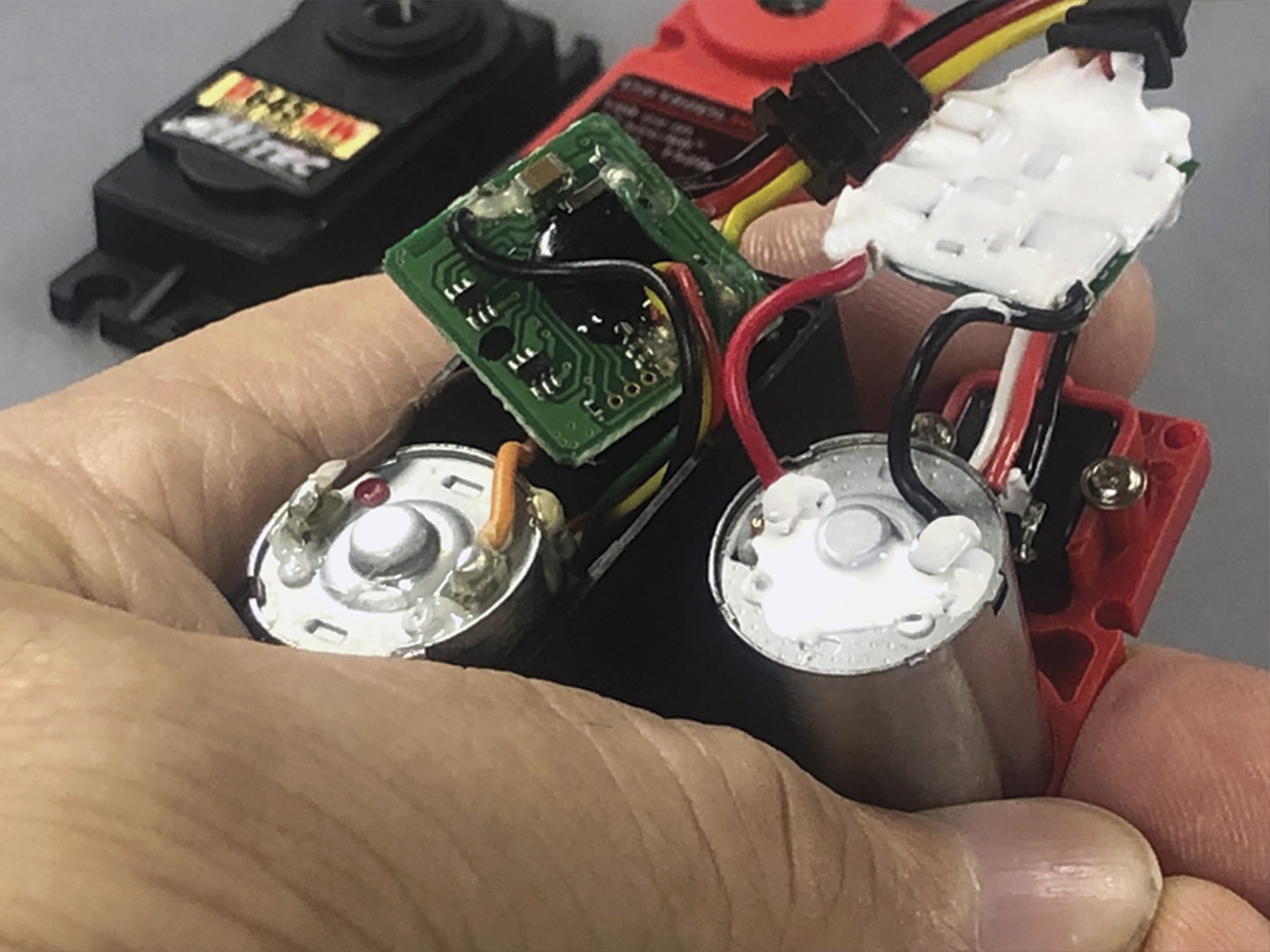
-DC-motors as used within these two popular Hitec and ProModeler servos
What to expect
Anyway, with this brief article we'll get you to 90% understanding about servo motors. You may not end up a motor-expert, but you'll probably know more about servo motors than your buddy (and maybe anybody in your club). And almost to a certainty more than anonymous keyboard jockeys dispensing advice regarding how you should spend your money, servo-wise.

Delving deeper
However, if you want more in depth knowledge, then at the end of this article is a link to Servo motors 102. It's a follow-on article, which should take you from 90% to 95% understanding.
And honestly? It's such an involved subject, Servo motors 103 only gets to you 99%. And the remaining 1% is what takes a college degree! Anyway, sensing a pattern in the article names? Yup, we're laying out these motor-white papers just like colleges lay out coursework for a difficult subject!
Anyway, with all 3 articles under your belt, next time you go to invest your hard earned coin in a set of servos, you won't need anybody's opinion - not even ours!
How manufacturing impacts motor cost
A servo comprises three basic parts. These are the electronics (motor and PCB, or printed circuit board), the transmission section (gears and shafts), plus the case into which, the parts are assembled. This paper deals with just the motors.
That said, if you take any two servos using the exact same type motor, and offering the exact same performance and price, then what dictates which is the better servo turns on the strength of the other major parts (case and transmission). Basically, no one factor dictates which is the pick of the litter.
This next photo shows case components for two servos of very similar performance and pricing. Deciding which is best for you is actually easy once you look beyond the specs and the price, and examine how they're made.
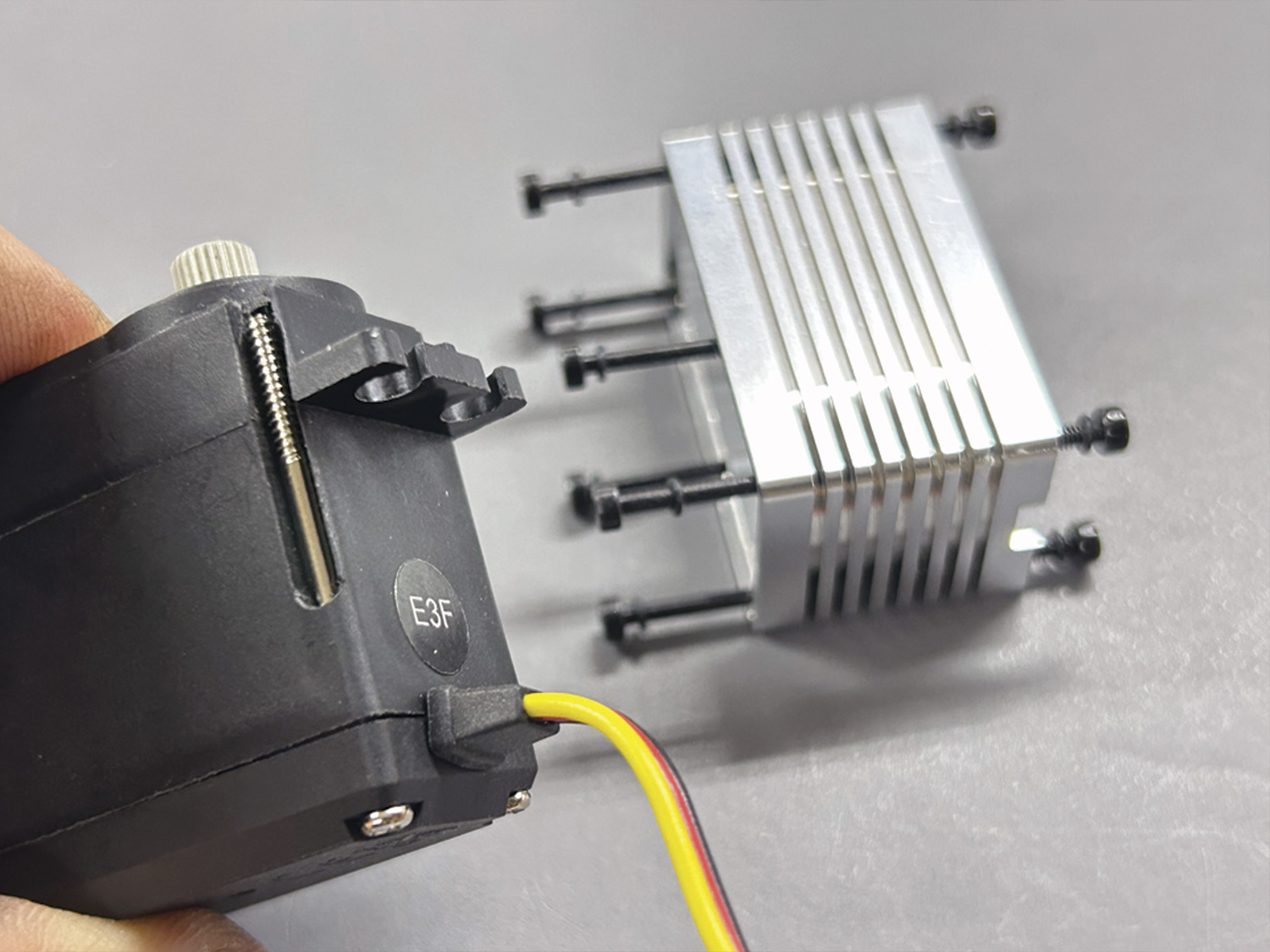
- Few believe best in class relies on 4 screws within plastic
So with the above photo, if everything is same-same motor-wise, but just one of the major parts is better (e.g. case, or gear train), then it should make for an easy decision of what to buy. Take my meaning?
Anyway, I'm digressing because cases (and gear trains) are the subject of a totally different set of white papers. So for right now, because our interest is in the first of the 3-part series regarding servo motors, let's get back to helping you suss out how to decide on the best servo for your application by learning about motors. So which are the first questions you need to ask?
- Begin with; what kind of motor's inside, is it an iron-core, coreless, or brushless?
This matters because it affects what the servo costs, how it'll perform, and even how long they'll last.
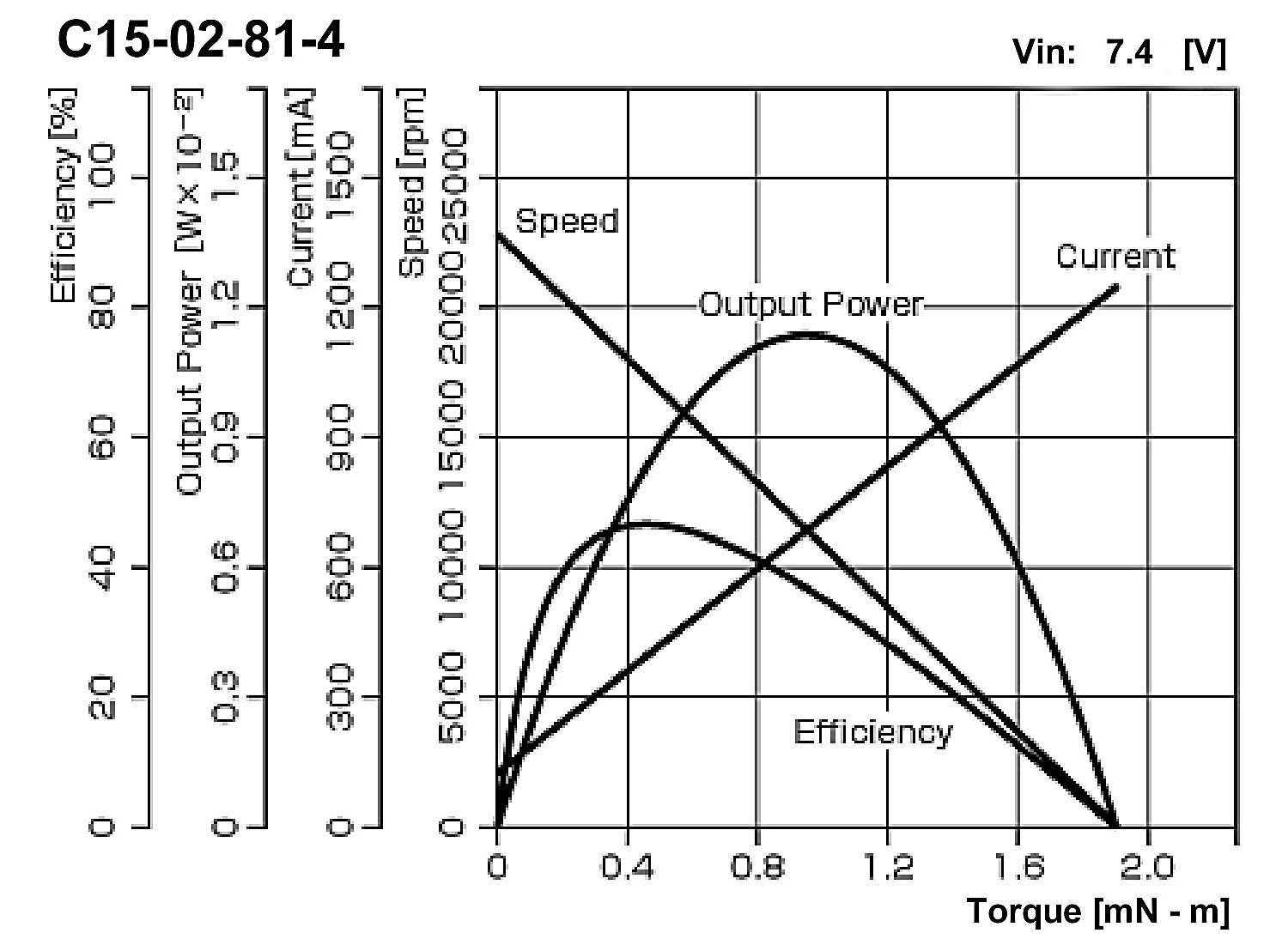
Anyway, from an engineering standpoint, when we're designing a servo we're using motor charts. Ones, which plots torque, speed, current, and efficiency, along with data regarding KV, voltage, and more. These charts give us a sense of what to expect performance-wise once we gear the motor for what we want it to achieve.
Anyway, and regardless of motor type, we always begin with a chart similar to this.
For almost every modeler, the first consideration when thinking about servos is price. Next comes torque. Few consider speed. But servo price is dominated by the cost of the motor. Basically, the more expensive the motor, the more expensive the servo.
This graphic perfectly shows the fundamental cost relationship between the 3-types of motors;

- Sorting iron-core, coreless, and brushless by price
Technological development
3-pole iron core brushed motors have been around the longest and cost the least. And technically, brushed motors include coreless types. However coreless and brushless servos address a different aspect of need (speed and durability). But to get the speed and the power, the type of magnet changes.
Enter the neodymium magnets. These are the ones made of rare earth minerals. The whole reason for exotic magnets is to get better performance. Technically, the magnets are made of materials that are not actually rare. What makes them so expensive is their processing is dirty. It pollutes the environment and this is why they've been outsourced to nations without the same protections. So what it all comes down to is money, which really does make the world go around!
Also, it's more accurate to say iron-core when referring to a 3-pole motors except DC-motor is the accepted industry nomenclature. Since the modeling industry uses descriptors based on number of poles, kindly allow me the leeway to use DC-motors interchangeably with 3-pole, or iron-core.
Note; the popular ProModeler DL-series incorporate 3-pole iron-core motors. And for what it's worth, so do servos by Futaba, Spektrum, Hitec, and others.
In short, what I'm saying is this; these dirt cheap iron core motors are ubiquitous! And while we're making fine distinctions, brushless motors are actually AC motors, but we'll touch on this later.
DC-motor servos
What's most important to know about DC-motors (iron core) is that they are (by far) the easiest to make. Plus they don't rely on exotic (rare earth) magnets, which make them cheap by comparison.
Added to which, they're simple, which makes them reliable. However, if there's a downside, it that the iron cores are heavy, which is where a coreless motor beats the iron-core motors, speed. Fortunately, since every model doesn't need speedy servos, and because just as with hot rods, speed costs, then easy, cheap, and reliable form a killer combination!
Construction basically consists of a bit of copper wire coiled around stamped iron plates stacked together making laminations we call the core. It's current flowing through the wire, which makes it into an electro-magnet. Spinning it within a metal can lined with a ferrite permanent magnet, along with a commutator ring and brushes (to switch the fields) is how it works. The detail to remember is they're very cheap and easy to make, simple and reliable, and what results is durable as Hell!
Basically, iron-core motors outnumber the rest about 99:1, give or take. And when designing a servo, an engineer spends a lot of time selecting the motor. But afterward, where they really earn their keep is sussing out the rest.
This being the gear ratio, gear material, case design, PCB design, etc.
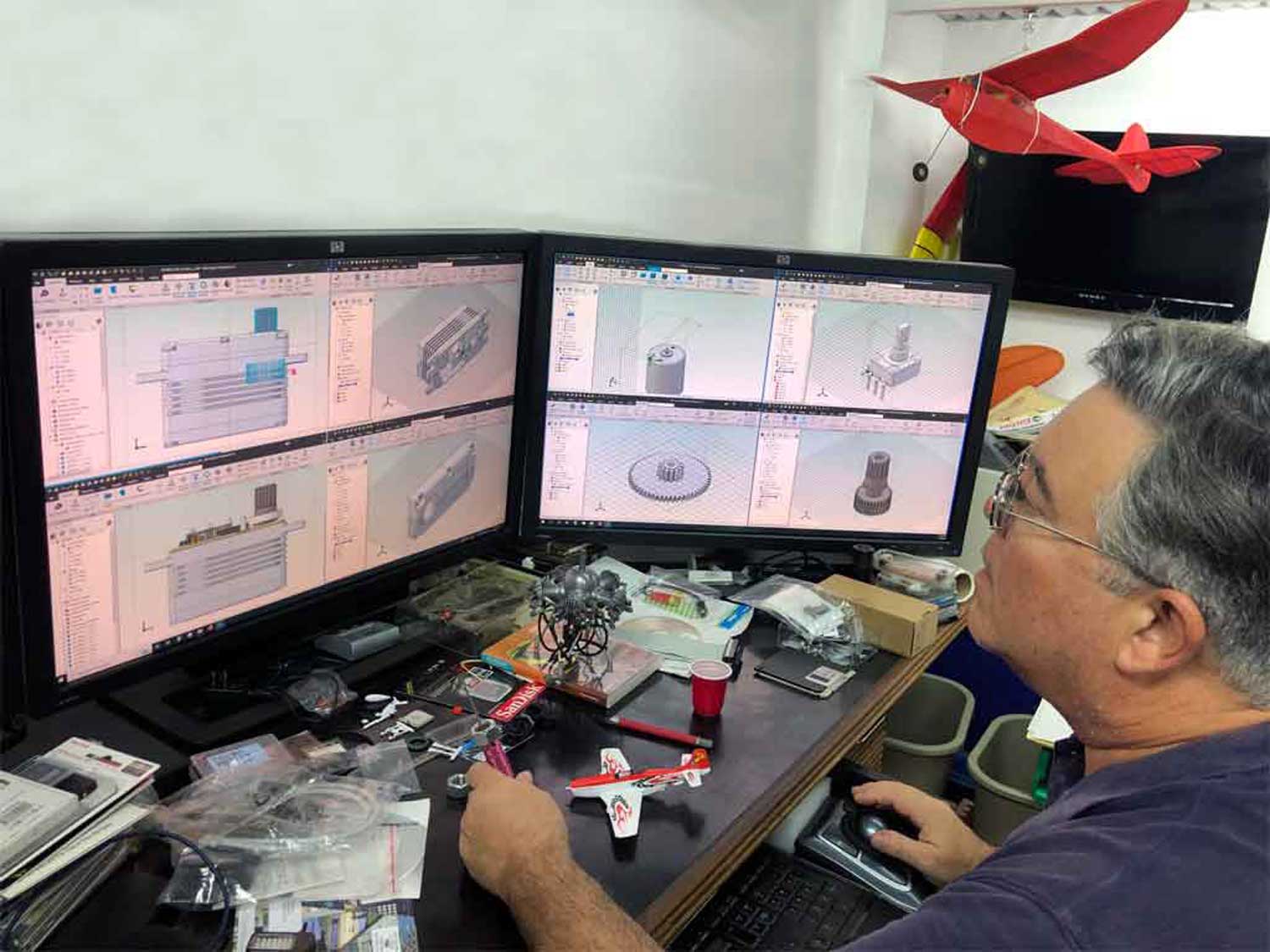
- Servos are born within a computer workstation
Note; the fact DC-motors are the most inexpensive bears no relationship whatsoever to servo quality - none!
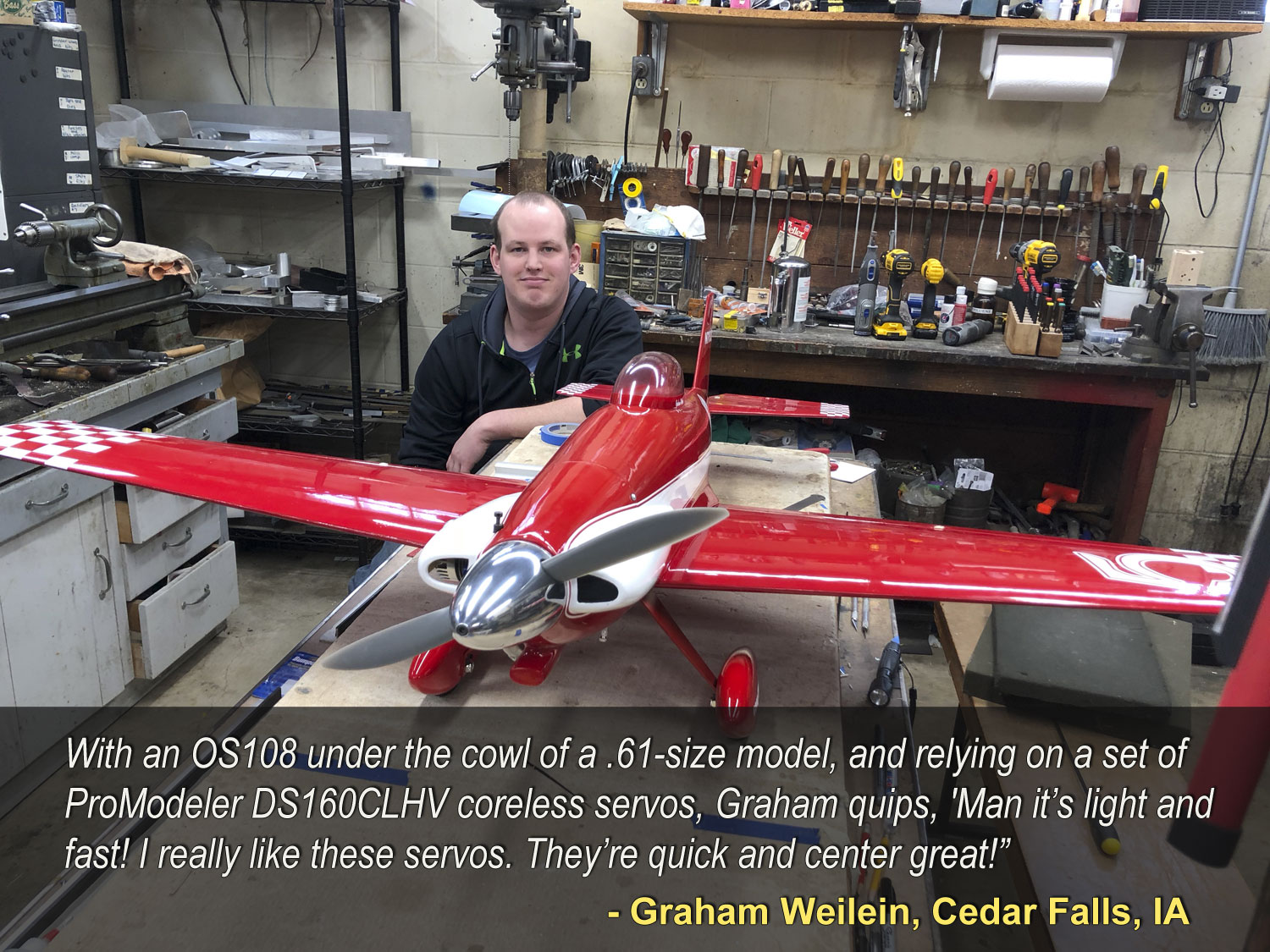
For example, in this next photo, this savvy modeler is using DL-series servos for his gas-turbine powered scale model jet of a Korean era Soviet fighter. Jets are unquestionably one of, if not 'the' most expensive forms of modeling.
So if nothing else, the mere fact this pilot trusts his very expensive model to DL-series servos should serve to confirm what we're saying. Servo build-quality is not correlated merely with the cost of the motor.
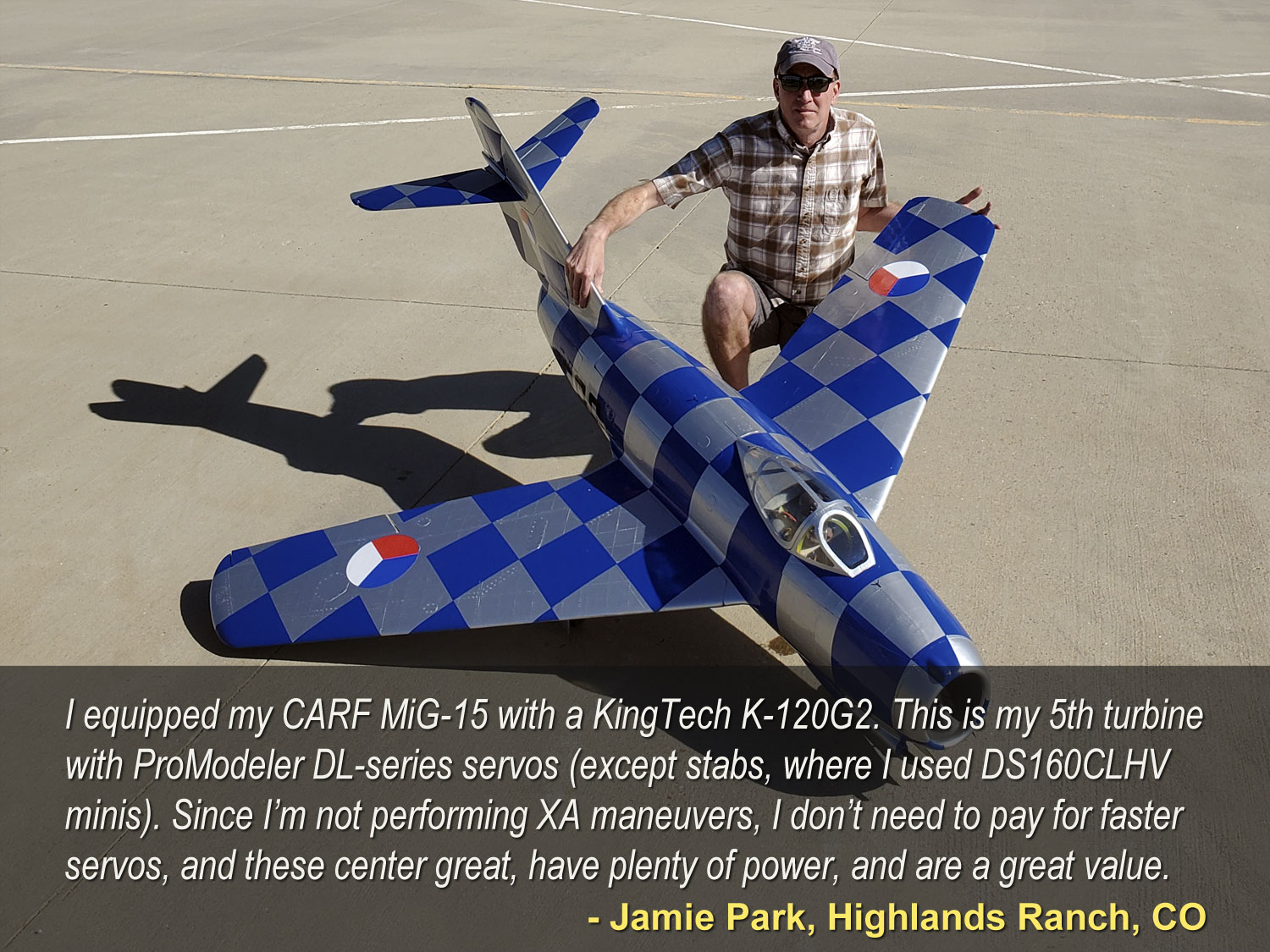
Put another way, some of the best servos in the world are built using the least expensive of motors. Why? Simple, it's because the engineer's judgment regarding performance is what guides the motor selection - not - the customer's expectation for how much servos for an expensive model should cost. There's a vast difference!
Recapping; while it's true cheaply made servos universally use iron-core motors because they're the least expensive, the converse isn't true. Point being, if you surround an inexpensive iron-core motor with better parts (e.g. the case and transmission), then as it turns out, you can make the world's best servo hit a price/performance point, which others neglect. The term for this is bargain!
So if you're in the know, then taking advantage of this tidbit of knowledge (to properly spec servos for your application) can save a ton of money. A perfect example is the next photo, wich is of DS360DLHV powering the steering of a Traxxas Slash 4X4.
Anyway, this fellow initially called asking about using our DS505BLHV but after we briefly chatted about his actual use-case (where I learned he was bashing in his backyard instead of racing), it led me to suggest a DL-series would be suitable. Honestly?
He was skeptical because his friends all purchased brushless servos. However, once he understood transit speed was of no consequence whatsoever for his real world application (speed is a strength of brushless servos), then he decide to take a chance and follow my suggestion.
End result? He's happy because, a) it's been working perfectly, and b) he saved some significant coin by speccing a DL-series servo for his rig.
And about a year later, he shared photos, including this one!
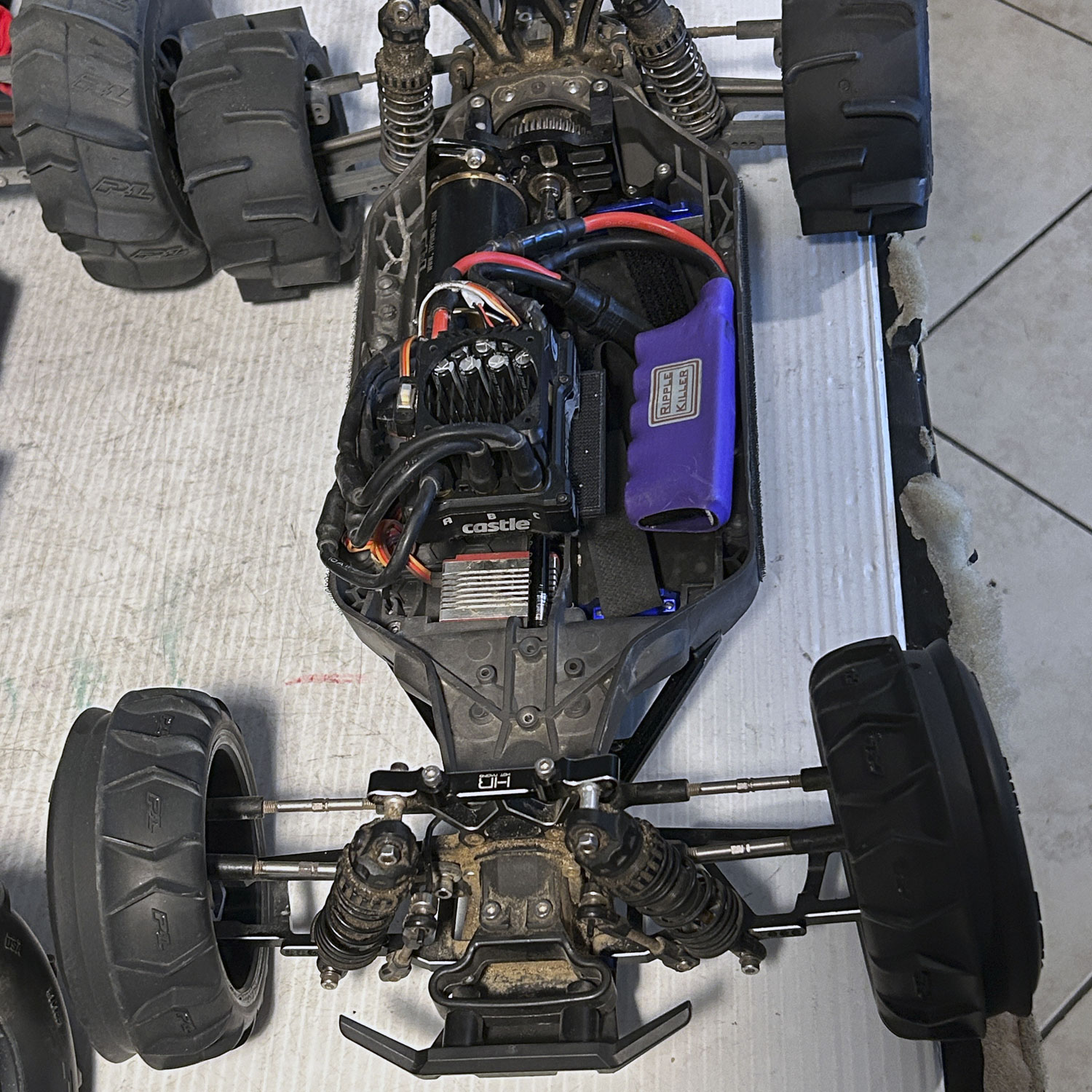
Bottom line? He could have ponied up for a faster more powerful steering servo (one with a transit time not just quicker than he needed, but so fast he wouldn't actually feel the difference other than in his wallet). Since that would have been a senseless waste of his money (unless your money grows on trees, of course), we guided him into a DL-series servo.
The important bit in all this is this; if you don't know what you need, give us a call and let's chat!
Putting hay down where the goats can get it
Bottom line? If servos in the 0.12 to 0.18sec/60° range offers enough speed for your application, and if 90-360oz-in is enough torque, then you can't buy better servos than ProModeler DL-series at any price! Of course, 'if' your application is such you need the speed of a coreless or brushless motor, and need more torque than DL-series offer, then this is expressly why these specialty motors exist!
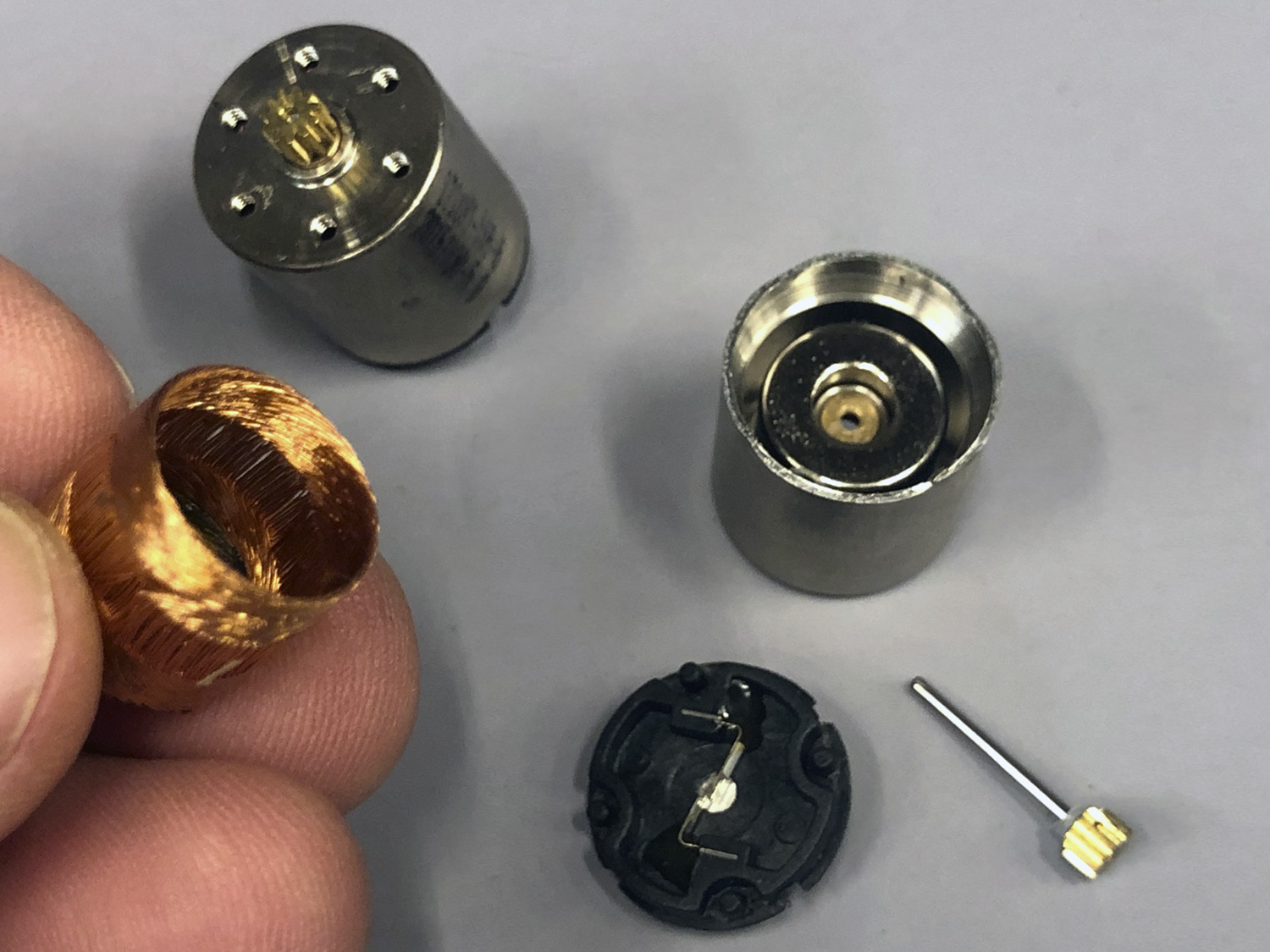
Anyway, in this next photo eyeball the guts of this 3-pole motor. You have the metal can with permanent magnet lining. The iron core, which is comprised of stamped pieces laminated together. The copper wire windings, the commutator split into three segments, plus the brushes on the endbell. Add the pinion gear pressed on the shaft for putting it all to work!
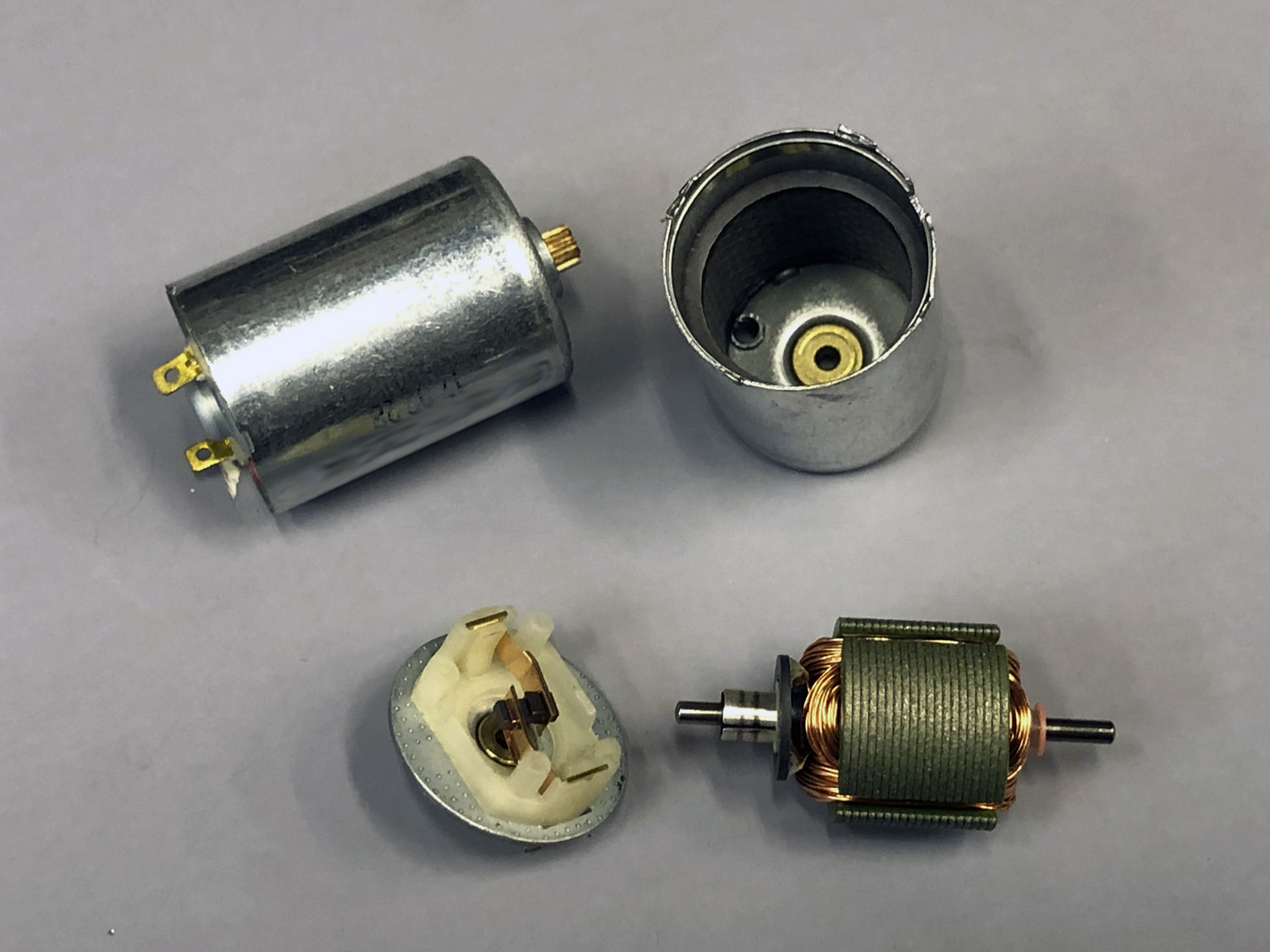
- The iron core of this 3-pole motor is composed of thin laminations
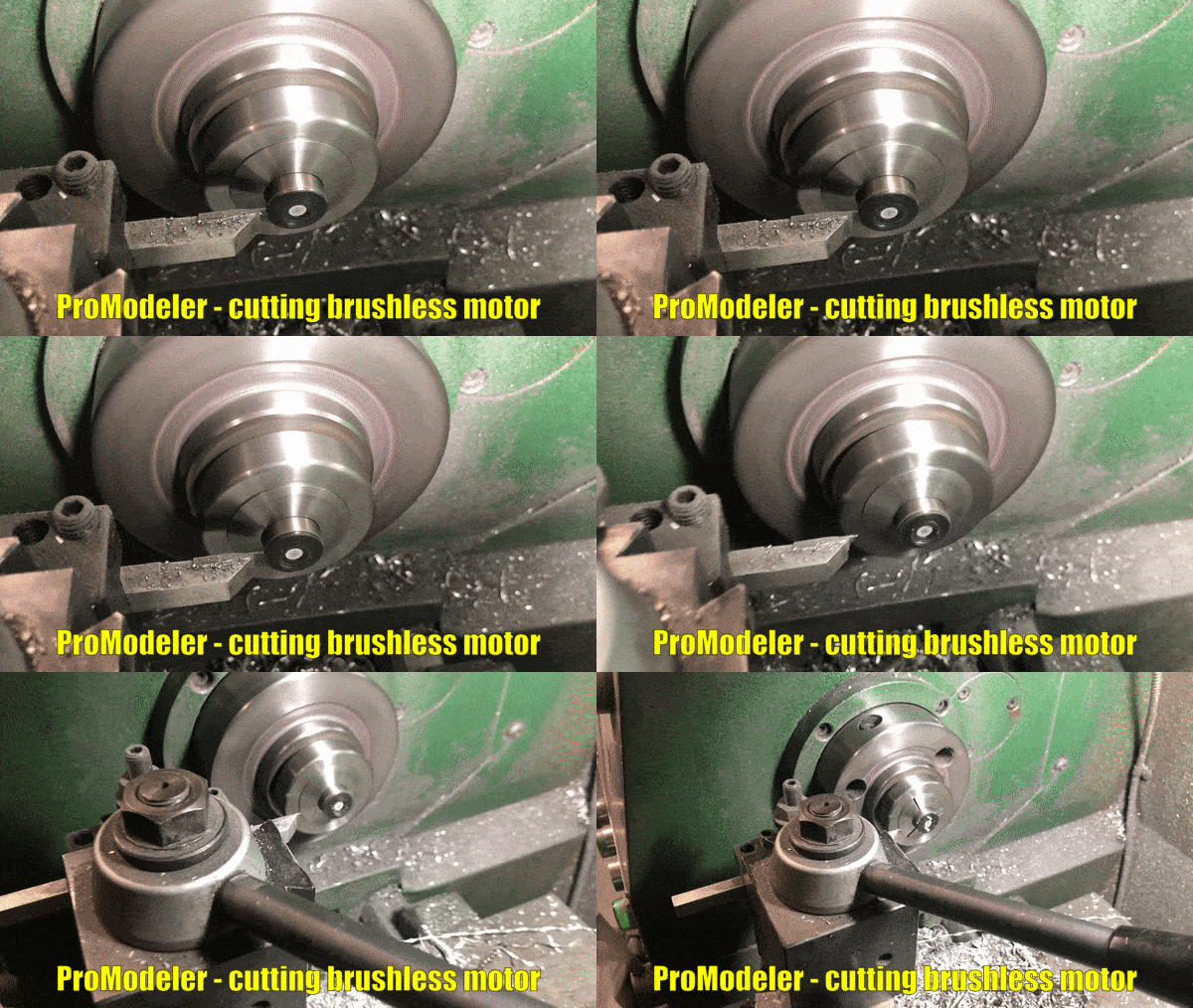
Getting the above photo was trickier than you might suspect. Required sacrificing motors. How? Simple, really; first, we chucked them up in a collet, and then we cut them open using the parting tool of a lathe.
Next, we took them to photography after which, Bob's your uncle, we end up with a bunch of pictures showing you the insides of servo motors!
Coreless motors
These are significantly more expensive than DC-motors because of a) how they're made, and b) because of the materials, themselves. Now we're getting into exotic magnets (neodymium).
If you're unaware, these magnets are graded by strength on a scale ranging from N35 to N52. Delving deeper into the weeds here is beyond the scope of the white paper. Thus, we'll leave it at that, but if you want to geek out, then visit WikiPedia's superb article on the subject.
Meanwhile, and just as with hot rods (I told you I'm car queer), when addressing the question of more powerful and going faster, the answer is always . . . more money. Of course, the corollary is this; when your application calls for more torque and speed, it's time to ditch inexpensive iron-core motors.
Means next we're getting into more expensive motors. Coreless and brushless!
Note; the principal advantage of a coreless versus a DC-motor is they accelerate/decelerate more quickly. This is because of how the windings are made. They're formed on a mandrel (a more expensive process) and rotate without an iron core. They're fundamentally lighter.
As a consequence of the ultralight rotating mass they are very quick to accelerate/decelerate, which is 'the' performance benefit. Commutation (field switching the windings) is still mechanical - e.g. pretty similar to how it's done with iron-core motors. However, making the delicate basket-like coils (winding) is a process that's incredibly expensive - more so than with iron-core motors . . . by a lot!
Below, just the woven wire rotor costs more than the entirely of a 3-pole motor! This, before we even get to discuss the exotic magnets.
Note; these are sometimes referred to as inside out motors because the rotor's on the outside of the magnet.
- Coreless motor with copper wire windings formed with a mandrel
Brushless motors
These are also called electronic motors and are quite accurately described as pricey! This is because they're manufactured similarly to a coreless motor with respect to the delicate windings and the superior magnets.
But beyond mandrel-formed coils and more costly magnets than found in iron-core and coreless motors, the relatively inexpensive mechanical commutation is replaced by electronic commutation. This brings benefits regarding reduced heat and longevity (and thus durability, or working life). The downside is electronic commutation costs more. Who benefits from this kind of servo type?
In a word, competitors. If you practice often for flying events, and/or if you simply fly a lot, or race every weekend, and if you need the ne plus ultra in terms of performance (speed, torque, and durability), then you have no choice but to get off your wallet and spec brushless servos.

Why not coreless? Simple, because coreless motors capable of outputting 500 to 1,000oz/in cost about 90-95% as much as similar performance brushless motors. Why? We don't know but we're paid the big bucks to make decisions, and that's why we skip coreless motors altogether when creating our top of the range servos.
Bottom line? Brushless motors are the most costly to make because the motor’s commutation (field switching) happens with Hall effect sensors (magnetically measuring the rotor position and switching fields) instead of with a commutator ring and brushes. Quite simply, it results in a significantly more expensive way to go about making motors - but - the beauty is what you get.
Since there are no brushes to wear, the motor lasts longer. Think about it; when the metal of the brushes arc (as they make/break contact), this vaporizes a little bit of metal (thus, creating fine pits as the brushes wear). These microscopic bits of metal have to go somewhere! The 'somewhere' is a fine coating on the inside of the motor components.
End result? This fine dust coating makes these motor shed heat less efficiently (and heat is bad juju for everything). And as brushes wear, then you get to end of life for the motor because you can't economically replace the brushes. So if we eliminate the wear of brushes 'and' the detrimental accumulation of fine metal dust on internal components, then you automatically get the benefit of a significantly longer motor life.
By significantly we're talking of an approximately 5X longer working life from your investment. And this is enough to pay off if you fly or drive a lot. Like big time!
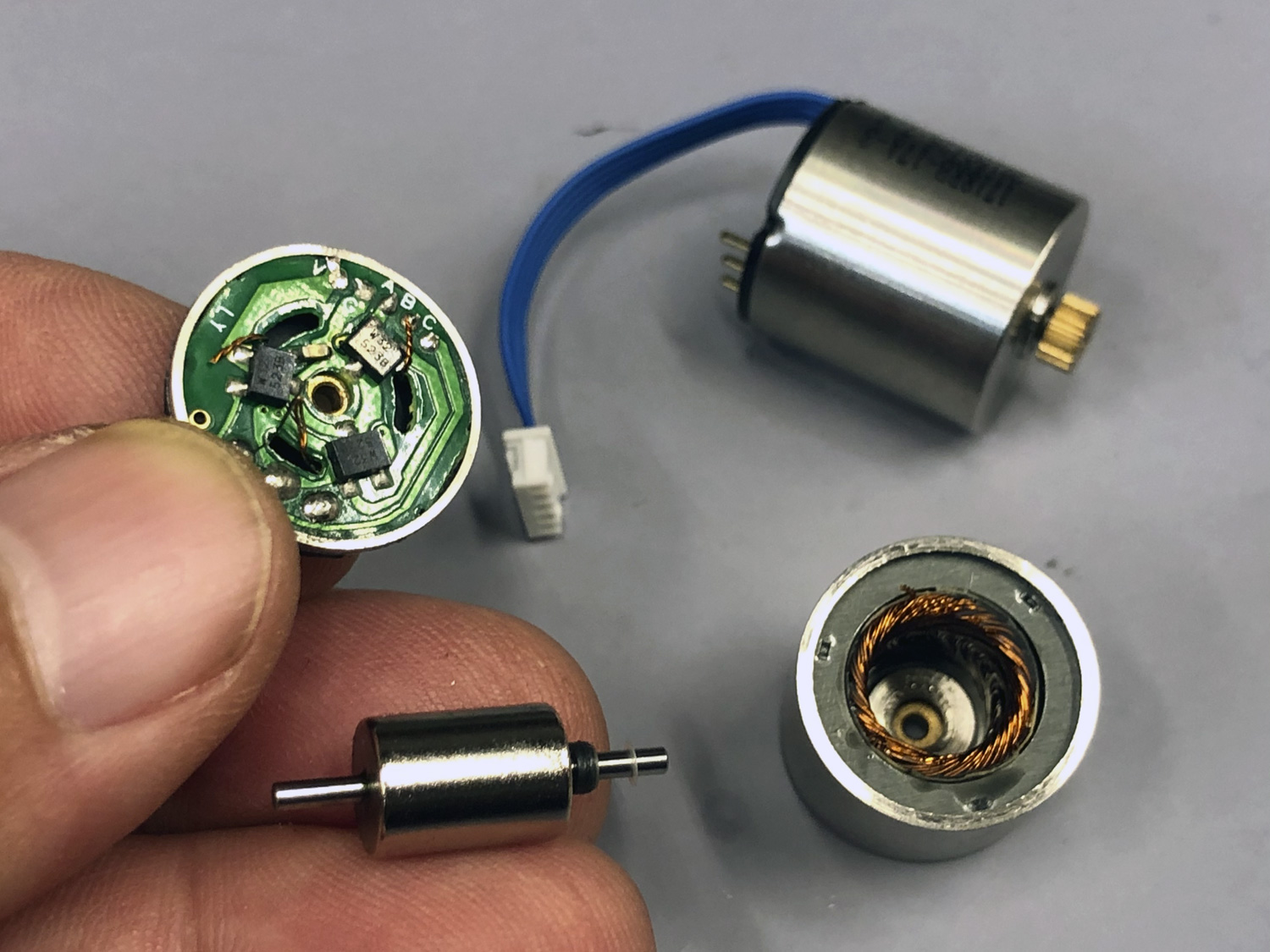
- So which one's best? As usual, the answer is . . . it depends!
Summary
Recapping; in exchange, for lasting a lot longer, brushless servo motors cost more to make than iron-core motors. However, if your requirements are only met by stronger/faster servos, then you don't really have a choice but to pony up when speccing servos for your project.
What about using more cheaply made servos? Maybe ones equipped with inexpensive brushless motors? Yes, you can do this. And who does it are guys who don't understand the tradeoffs they're making by buying such servos. But the shrewd ones, those of you who actually understand how value works, don't because if they use cheapo motors, they take other shortcuts in construction. And this is easy to suss out.
Anyway, to learn more about why cheaply made servos don't actually serve your best interests, review these matchUP articles.
- Hitec HS-645MW versus ProModeler DS180DLHV
- Futaba HPS-A703 versus ProModeler DS930BLHV
- Amazon brand 35Kg-cm versus ProModeler DS505BLHV

Factoid: 80% of ProModeler sales are standard class servos. And of the 80%, by a country mile, the most popular are DL-series (a touch over 90% of sales). Why is this?
Simple, it's because ProModeler DL-series are the perfect compromise between price and performance. Or at least it's true for 9 out of 10 modelers. Maybe it's true for you, too!
And yet, for a certain few (and you know who you are), this perfectly explains why we offer servos with motors comprised of more exotic magnets and build techniques!

Part 2 in this 3-part series is Servo motors 102 - just click the link and it opens in a new browser tab.